Upper Deck Basketball: Sealed Box Prices, Key Seasons and Rookies
Upper Deck's flagship basketball line launched in 1991-92 and ran for nineteen seasons until the company's NBA license expired after 2009-10. It is the line that carried Michael Jordan through his second three-peat and delivered the 2003-04 LeBron James rookie class, and it spans both the most overproduced era in card history and one of the tightest. If you are shopping for a sealed Upper Deck basketball box, the season you pick matters far more than the format, and the price gap between 1991-92 and 2003-04 is enormous.
Buy Upper Deck Basketball sealed
All listings on eBay →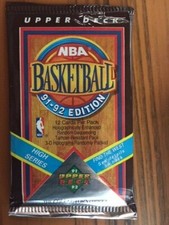 1991-92 Wax Pack
$3.49
1991-92 Wax Pack
$3.49
 1991-92 Wax Box
$189.99
1991-92 Wax Box
$189.99
 1996-97 Retail Box
$637.95
1996-97 Retail Box
$637.95
 1996-97 Hobby Box
$649.99
1996-97 Hobby Box
$649.99
 2003-04 Blaster Box
$1,499.99
2003-04 Blaster Box
$1,499.99
 2003-04 Hobby Box
$3,995.95
2003-04 Hobby Box
$3,995.95
Prices update daily from live eBay listings. Prefer to buy in person? Find a local card shop · All NBA sealed

Quick facts
| Brand | Upper Deck |
| First season | 1991-92 |
| Release window | Historically fall for Series 1, late winter for Series 2 |
| License | NBA and NBPA licensed 1991-92 through 2009-10; no NBA products since |
| Box formats | Hobby wax box, retail box, rack pack box, blaster, factory set, case |
| Guaranteed hits | None in the 1990s; roughly two memorabilia cards per hobby box by 2003-04 |
| 2003-04 hobby box (Aug 2026) | Roughly $1,700-$2,600, thinly traded |
Box formats for Upper Deck Basketball
Hobby Wax Box
The 1990s hobby standard was 36 packs of 12 cards, and that configuration held through most of the decade. Early-1990s boxes were printed in enormous quantity, which is why a 1991-92 low series box still sells in the low hundreds. By 2003-04 the hobby box had tightened to 24 packs of eight cards with roughly two memorabilia cards per box, and the pricing reflects the rookie class rather than the configuration.
Series 1 and Series 2
Upper Deck split most seasons into a low series and a high series (later branded Series 1 and Series 2). Series 2 boxes usually carry the update rookies, so for draft-class seasons the second series can be the more expensive of the two. Always confirm which series a listing is selling; sellers frequently omit it, and the price difference can be significant.
Retail, Rack Pack and Blaster
Retail wax, rack packs and later blasters were sold through mass-market channels and generally trade at a discount to hobby for the same season. Rack packs from the early 1990s are collected on their own because the top card is visible, and pack-searching is a real concern with any format where cards can be seen or felt.
Factory Set
Upper Deck issued complete factory sets for several seasons. A sealed factory set is a different asset from a wax box: it guarantees the base cards but no inserts, and appeals to set builders rather than rippers. Sets from rookie-class seasons trade at modest premiums over singles cost.
Hobby Case
Cases were typically 20 boxes in the 1990s and 12 boxes in the 2000s. Sealed cases from the overproduced seasons are common and cheap on a per-box basis; sealed cases from 2003-04 are genuinely scarce and command a premium over the sum of their boxes.
Key seasons: prices and rookies
| Season | Hobby box (Aug 2026) | Other formats | Key rookies / chase |
|---|---|---|---|
| 1991-92 | $125-$225 | Retail $90-$175 | Larry Johnson, Dikembe Mutombo; Jordan Basketball Heroes |
| 1992-93 | $150-$350 | Retail $100-$250 | Shaquille O'Neal, Alonzo Mourning |
| 1996-97 | $450-$1,200 | Series 2 often higher | Kobe Bryant, Allen Iverson, Steve Nash, Ray Allen |
| 1998-99 | $250-$600 | Retail $175-$400 | Dirk Nowitzki, Vince Carter, Paul Pierce |
| 2003-04 | $1,700-$2,600 | Case $22,000-$32,000 | LeBron James, Dwyane Wade, Carmelo Anthony, Chris Bosh |
| 2009-10 | $150-$350 | Retail $90-$200 | Blake Griffin, Stephen Curry, James Harden; final UD NBA season |
Two seasons carry this line. The 1996-97 boxes hold the Kobe Bryant and Allen Iverson rookie cards, and the 2003-04 boxes hold the LeBron rookie plus two memorabilia cards per box. Everything from 1991-92 through 1994-95 was printed in quantities no amount of demand has absorbed, which is why those boxes remain cheap enough to open. The 2009-10 season is interesting for a different reason: it is the last NBA-licensed Upper Deck basketball product ever made and it contains the Curry rookie, but it was also printed in volume, so the scarcity story is weaker than collectors assume.
None of these prices come from a published sealed-box index. The major price guides track singles, not vintage basketball wax, so the ranges above are drawn from dealer asks, auction results and completed listings, and dispersion is real.
Chase cards, parallels and hit rates
The 1990s boxes are insert-driven rather than hit-driven. Basketball Heroes, Award Winner Holograms, Rookie Standouts, Jordan-specific subsets and the various hologram inserts are what collectors chase, and Michael Jordan content drives box demand for every season he appears in. There are no autographs or memorabilia cards in the early boxes at all.
From the late 1990s onward Upper Deck layered in Game Jersey memorabilia cards, autographed Game Jersey parallels numbered to 100, Black Diamond Rookie F/X crossover cards and hobby-exclusive die-cut SE inserts. By 2003-04 a hobby box averaged two memorabilia cards, with Gold parallels numbered to 100 and Rainbow parallels numbered to 25. None of that changes the fundamental point: a 2003-04 box costs what it does because of the chance at a LeBron James rookie card, not because of the hit structure.
Is Upper Deck Basketball worth buying sealed?
For 1991-92 through 1994-95, sealed boxes are cheap entertainment rather than an investment. Supply is deep, the base cards are worth cents, and appreciation over thirty years has been modest. For 1996-97 and 2003-04 the calculus changes: those boxes are lottery tickets on specific rookie cards, and the expected value of an average box sits well below the ask.
The discontinuation is already priced in. Upper Deck cannot make more NBA product, so the sealed universe is fixed and slowly shrinking as boxes get opened. That is genuine structural support, but it applies equally to Fleer and 1990s Topps, and it has not turned common seasons into scarce ones.
How to spot fakes and resealed boxes
Vintage basketball wax is resealed often enough that unauthenticated boxes should be discounted. On a 1990s Upper Deck box, look at the cellophane: factory wrap is tight, the seams sit flat, and the folds at the ends are crisp and symmetrical. Reheated wrap shows crinkling, a loose fit, cloudy patches or a seam that runs down the middle of a panel rather than the edge. Check the box flaps for glue residue and for corners that have been opened and re-tucked.
For anything you plan to hold, buy a box authenticated by Baseball Card Exchange or a comparable service. A BBCE-certified or FASC box trades at a real premium over raw sealed wax because the buyer is not carrying the reseal risk, and that premium is usually smaller than the discount you would take reselling an unauthenticated box later. Individual packs are the highest-risk purchase of all: searched and resealed 1990s packs circulate freely.
Where to buy Upper Deck Basketball sealed
Local shops with a vintage case are the best place to inspect wrap in person before paying. Card shows are where most sealed 1990s basketball actually changes hands, and the sealed-wax specialists at larger shows will usually let you handle a box. Online, these searches keep the results clean:
Frequently asked questions
Is Upper Deck basketball still made?
No. Upper Deck's NBA and NBPA license ran from 1991-92 through 2009-10 and Panini took over as the exclusive NBA licensee. Upper Deck has not produced an NBA-licensed basketball card since, though it made collegiate and legends basketball products for several years afterward.
Which Upper Deck basketball season is the most valuable sealed?
2003-04, because it carries the LeBron James, Dwyane Wade, Carmelo Anthony and Chris Bosh rookie cards. 1996-97 is second on the strength of the Kobe Bryant and Allen Iverson rookies.
How much is a 1991-92 Upper Deck basketball box worth?
A sealed low series hobby box went for roughly $125-$225 in August 2026. The season was heavily overproduced, so supply stays ahead of demand and prices have moved very little.
What is in a 2003-04 Upper Deck basketball hobby box?
Twenty-four packs of eight cards, with roughly two memorabilia cards per box on average plus hobby-exclusive die-cut inserts and Gold and Rainbow numbered parallels.
Should I buy BBCE-authenticated Upper Deck basketball wax?
For any box you intend to hold or resell, yes. Third-party authentication removes the resealing question, and authenticated boxes consistently sell for more than raw sealed boxes of the same season.
Do Upper Deck basketball boxes from the 1990s contain autographs?
The earliest seasons contain no autographs or memorabilia at all. Autographed Game Jersey cards and memorabilia inserts appear from the late 1990s onward, and by the 2000s a hobby box averaged around two memorabilia cards.
Related sets
Prices in this guide were last reviewed 2026-08. Live eBay listings above update daily.